
Forestry Mulching in Granbury, TX
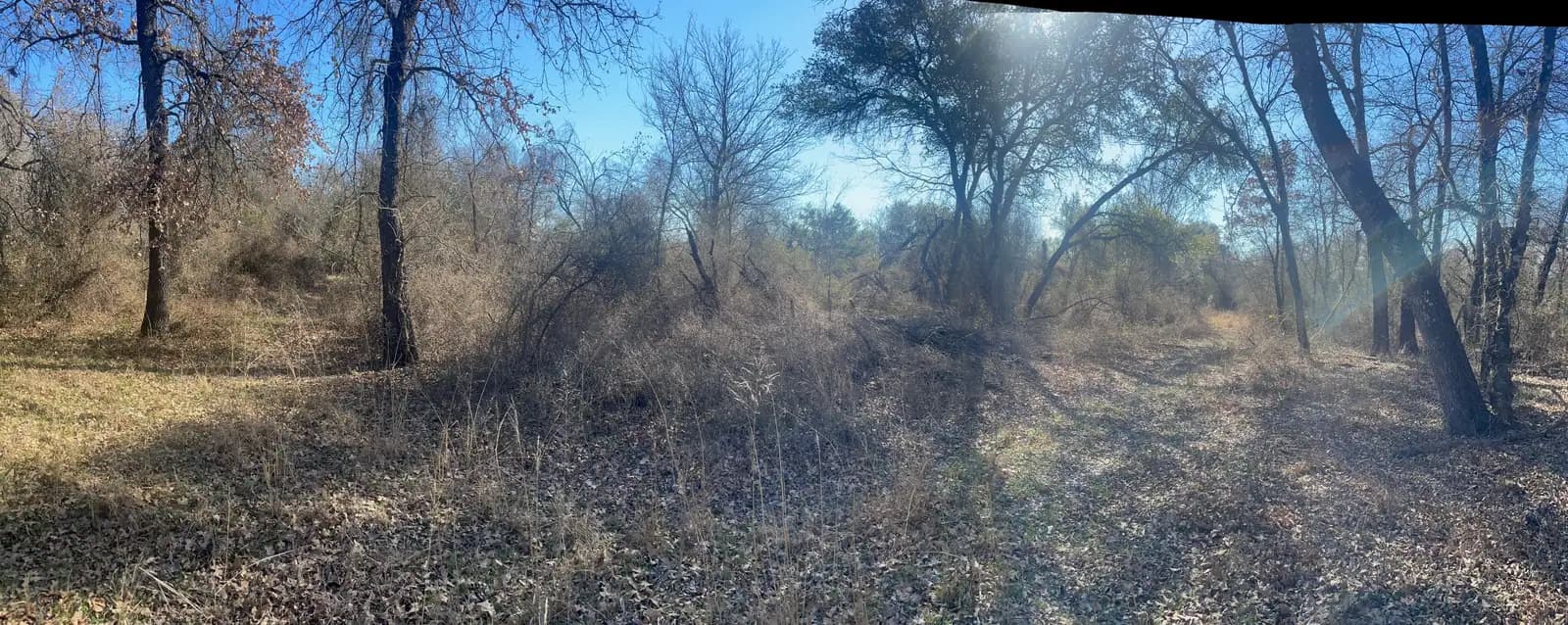
If the back half of your property has disappeared under cedar, mesquite, and greenbriar, you're in good company. Across Hood County, from the wooded homesites of Pecan Plantation to the open pasture west of town toward Lipan, brush takes land back faster than most owners can fight it with a chainsaw. Black Knuckle Land Management provides forestry mulching in Granbury, TX that grinds unwanted trees and brush into mulch right where they stand. There are no burn piles, no hauling, and no torn-up topsoil. One thing to know up front: we're a land clearing company, not a land seller. We work on property you already own.
What Forestry Mulching Actually Involves
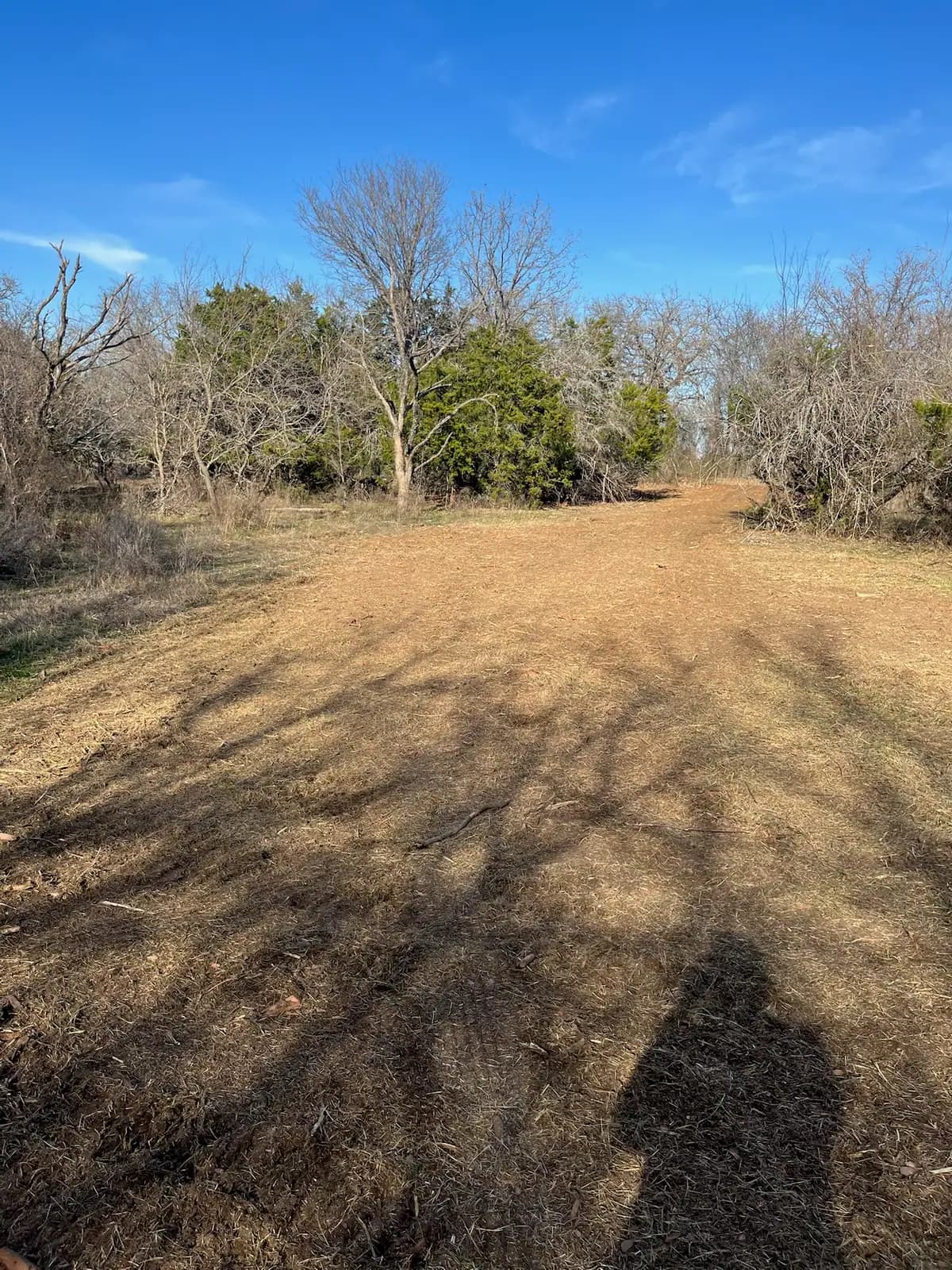
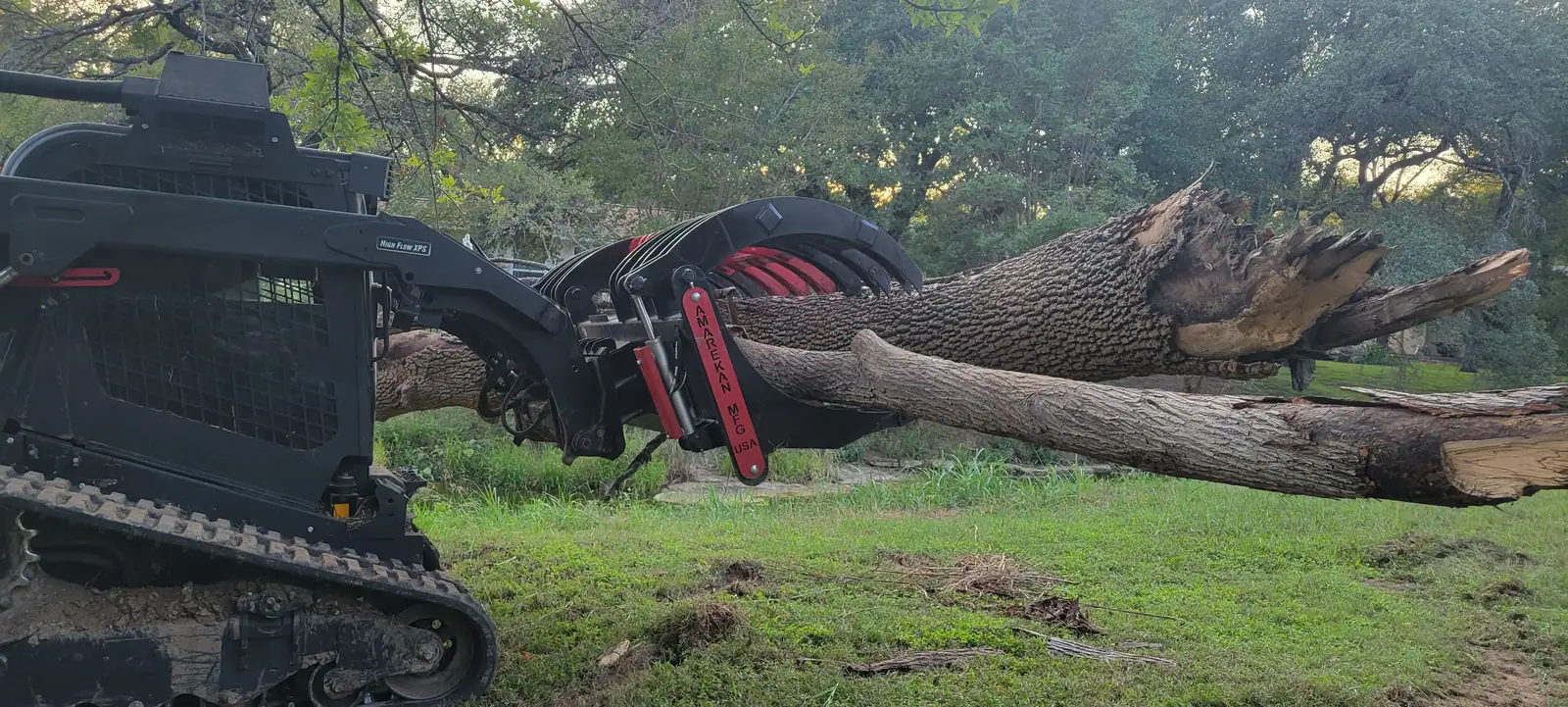
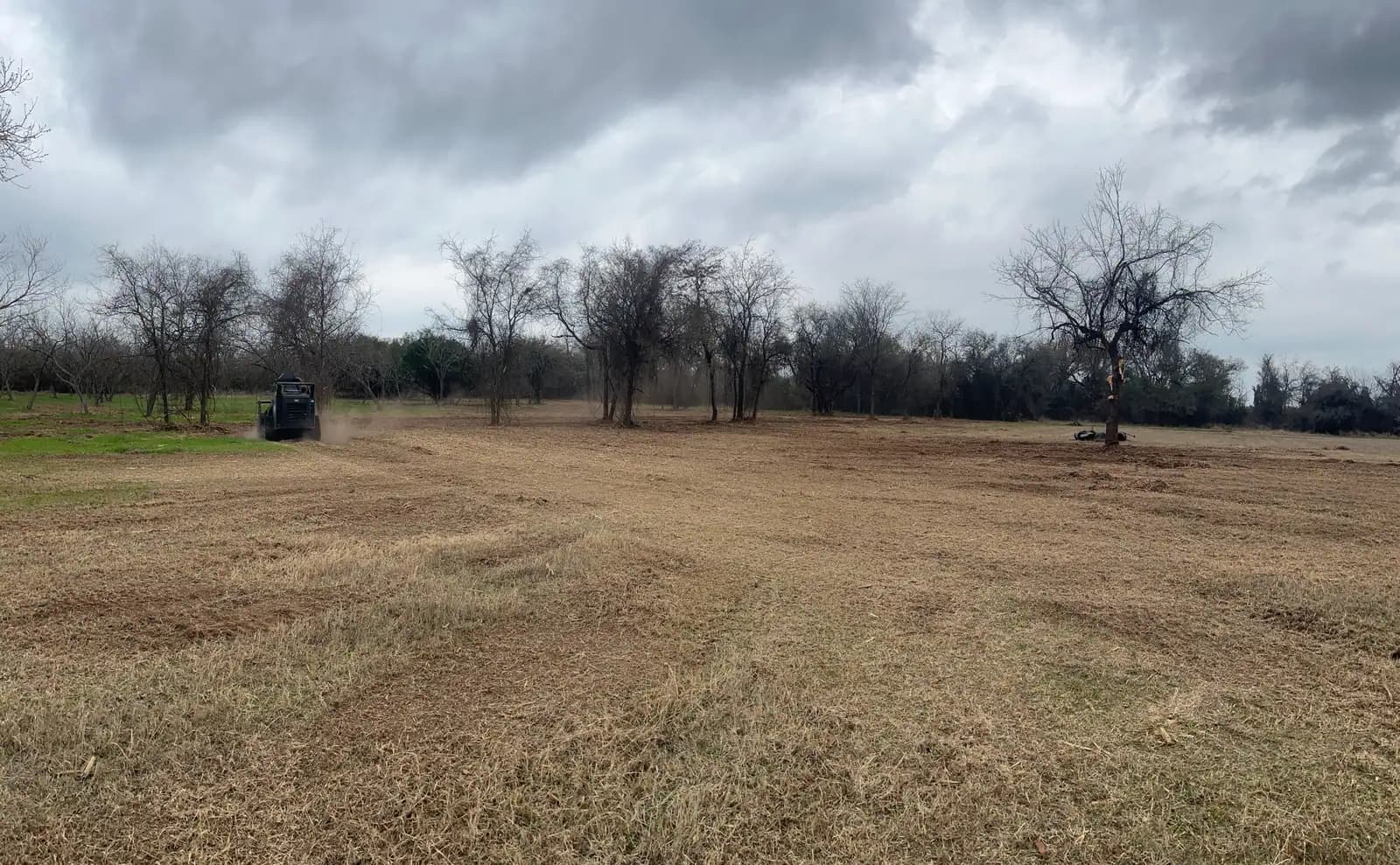
Forestry mulching is a one-step land clearing method that cuts, grinds, and spreads unwanted vegetation in a single pass. The before picture is familiar in the Cross Timbers: fence lines you can't walk, pasture shrinking every year as Ashe juniper and mesquite creep in, and a lot so thick you can't see across it to plan a house site. Our operator runs a high-flow skid steer fitted with a forestry mulching head, a heavy steel drum lined with hardened cutting teeth that spins at high speed off the machine's auxiliary hydraulics. The operator lowers the head over each tree and feeds it in from the top down, reducing trunks up to roughly 8 to 10 inches in diameter, depending on species, to chips before working the stump down near grade. Brush, saplings, and limbs go through the same drum.
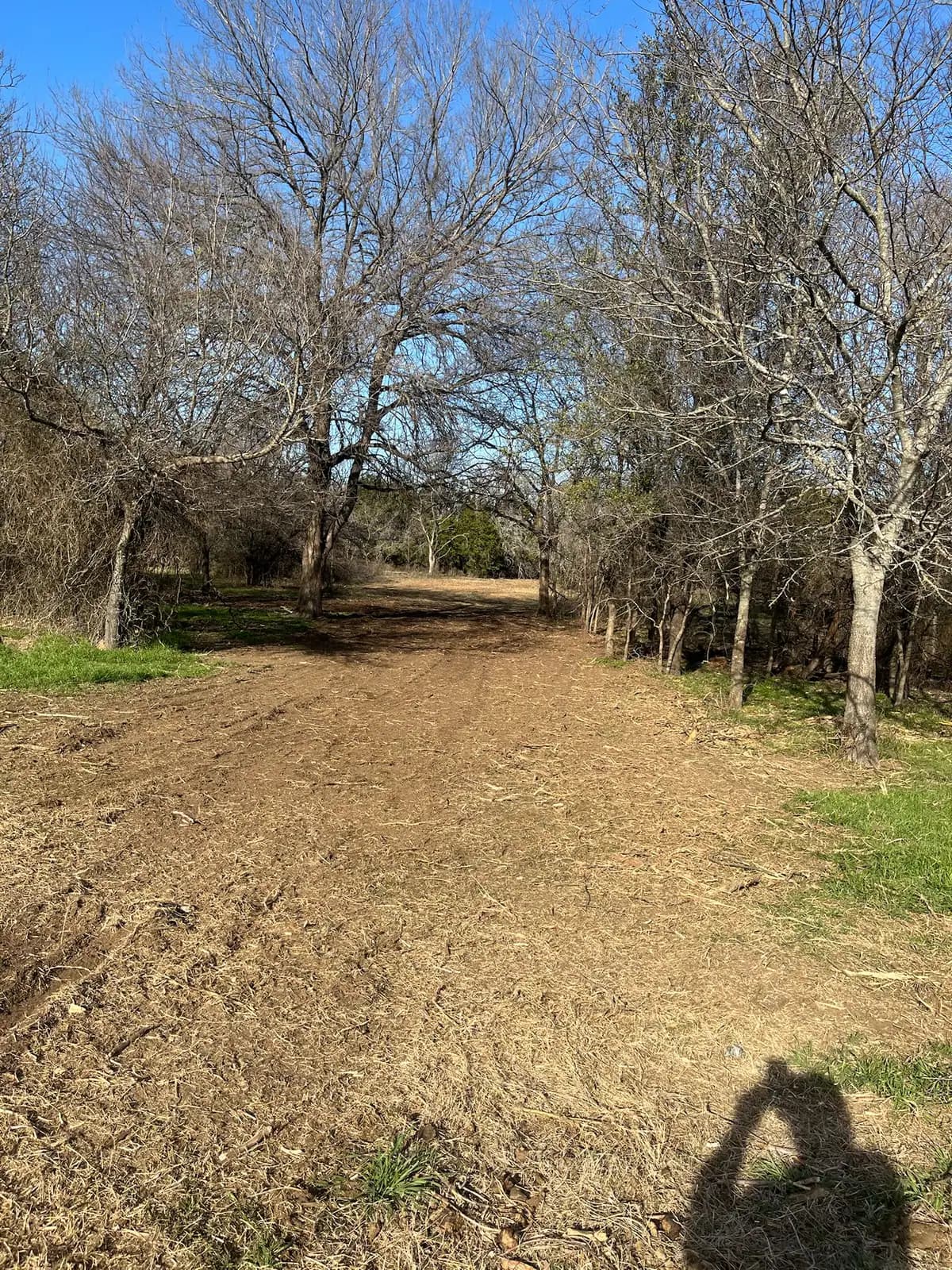
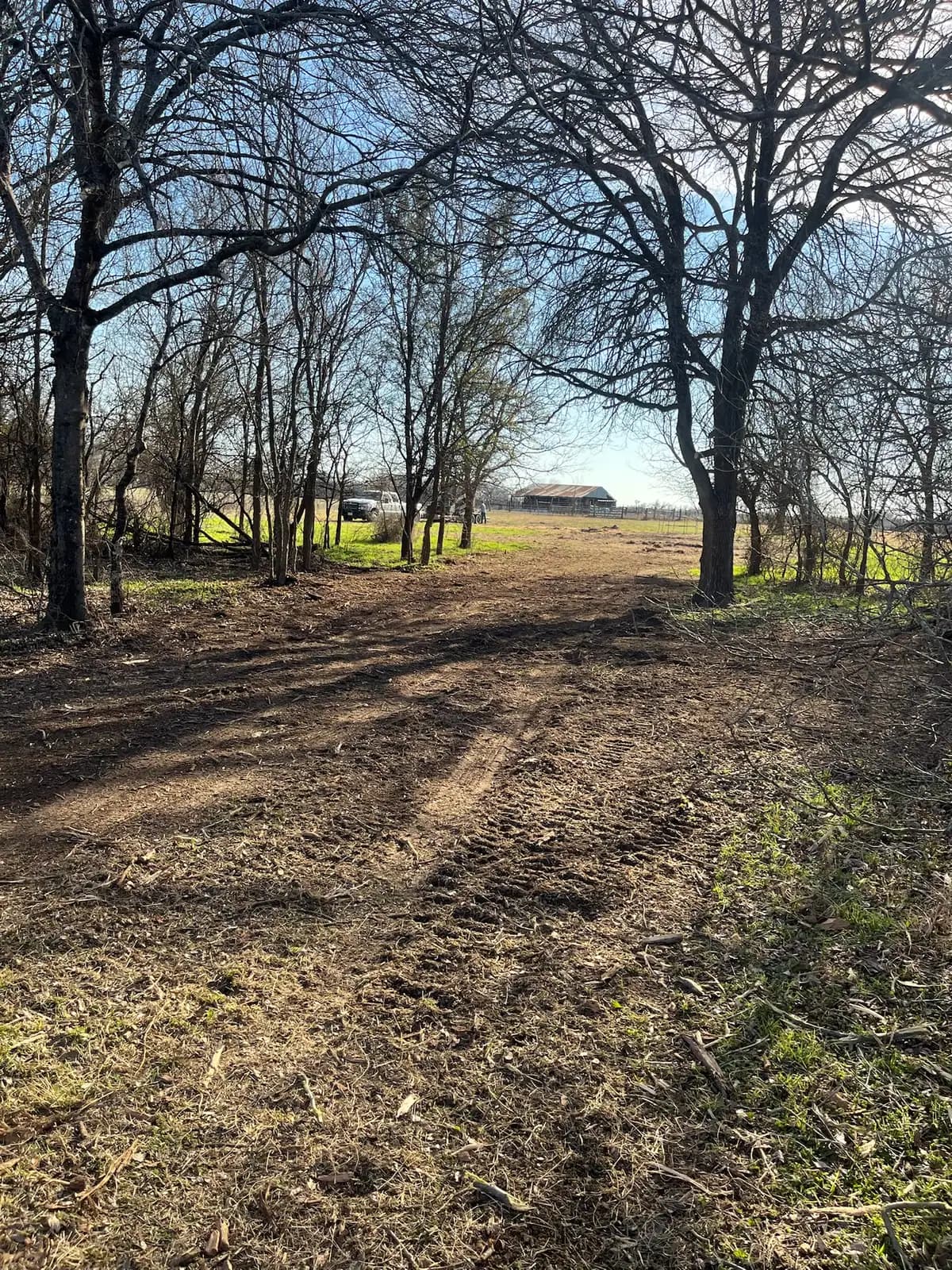
What's left is a layer of shredded wood spread across the ground that shades out weed seed, slows erosion on bare slopes, and breaks down into organic matter over time. Because nothing is pushed, piled, or burned, the root mat and topsoil stay put, and the trees you mark to keep stay standing. When we pull off, you have walkable, usable ground with clean sight lines, ready for grazing, a new fence, a building site, or a view you haven't had in years.
Our Forestry Mulching Process
- 1
Walk the Property and Mark What Stays
We start with a free on-site visit and walk the ground with you instead of quoting off a satellite photo. We note tree species, stem diameters, slope, rock, soft spots, and gate width for trailer access, and we flag the oaks, pecans, and shade trees you want to keep. This is where the scope gets defined in plain terms: which acres, how far off each fence line, and how close to the house. A clear scope is what keeps the final bill matching the estimate.
- 2
Get an Estimate Built on Your Ground
You receive an estimate based on what we actually saw, including vegetation density, terrain, and access. If your job is better suited to a mower, or will need dirt work afterward, we'll say so. We don't offer finish grading, so we won't sell you a result the mulcher can't deliver. You pick a start date that fits your schedule.
- 3
Prep the Site and Mark Hazards
Before the head ever spins, the operator walks the work area for old fence wire, buried T-posts, rock ledges, septic lids, well heads, and irrigation lines. Anything that could damage the cutting teeth or be damaged by them gets flagged. We also set a safety zone. A forestry mulcher can throw wood chips a long way, so people, pets, and livestock stay well clear while it runs.
- 4
Mulch From the Top Down
Our operator works each tree from the canopy down, so material falls into the drum rather than across your fence. Brush and saplings are cleared in overlapping passes, and stumps are ground to near ground level. Around the trees you're keeping, we slow down and keep the head off trunks and exposed roots. That matters for oaks: fresh wounds give oak wilt a way in, and the risk is highest in late winter and spring.
- 5
Final Check and Even Ground Cover
Before we load the trailer, we go over the finished area, touch up any missed stems, and spread heavy mulch piles so the ground cover is even. You get back open, walkable land with the mulch layer already protecting the soil. We'll also tell you what to expect next: which species may resprout, and when a follow-up pass with brush hog mowing makes sense to keep the land open.
Forestry Mulching Services for Every Kind of Property
Every property is different, so we've organized our mulching work around the jobs landowners call us for most.
Contract clearing
Our forestry mulching services cover lot clearing, fence lines, rights-of-way, and fire breaks on homesites, acreage, and ranch property.
Tight lots and wooded homesites
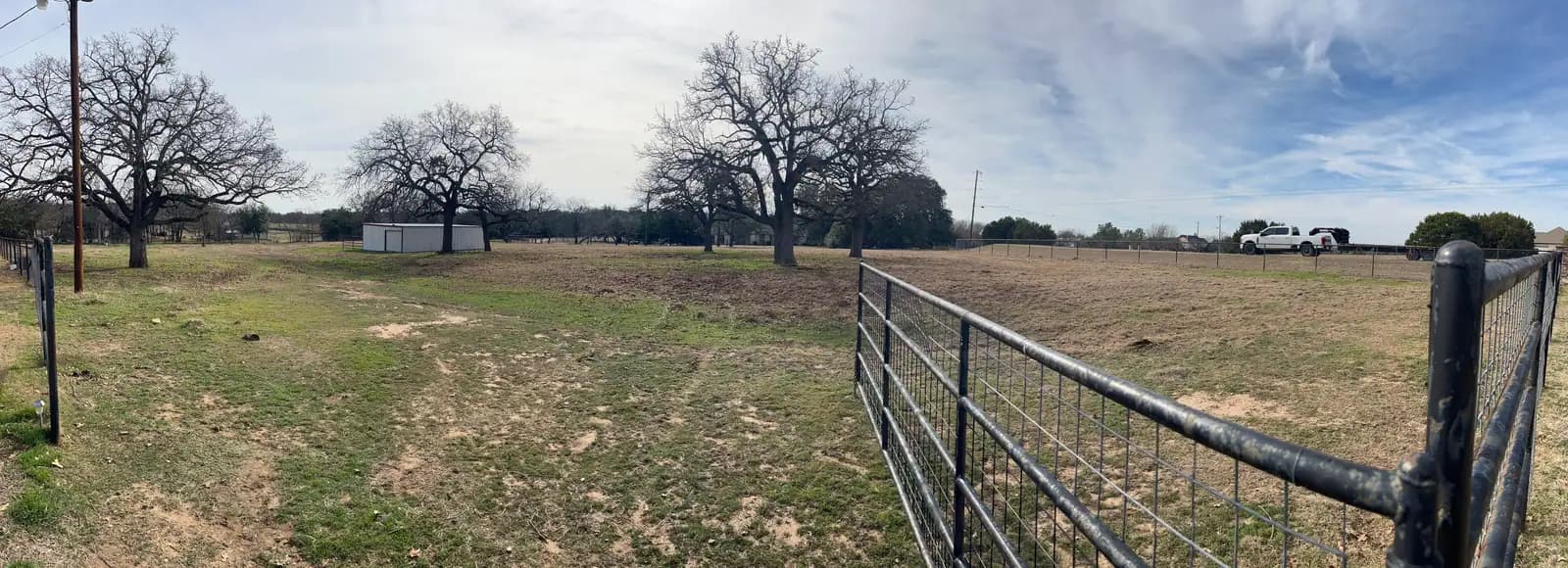
Skid steer forestry mulching fits spaces where a full-size dozer would do more harm than good.
Selective clearing
Our brush mulching service takes out the understory, keeps your good trees, and opens up the view.
Ranch and pasture tracts
Forestry mulching per acre is built for pasture reclamation and larger acreage.
Serving Granbury and the Surrounding Area
Black Knuckle Land Management is based in Granbury and works land within roughly an hour to an hour and a half of town. Our forestry mulching crews run US-377 east toward Cresson and west through Tolar toward Stephenville, SH-144 south to Glen Rose and the Paluxy River country, and FM 51 north toward Weatherford, Springtown, and Palo Pinto County. Closer to home, we clear wooded lots in Pecan Plantation, DeCordova, Oak Trail Shores, and Canyon Creek, along with acreage around Acton and the Brazos River below Lake Granbury.
The land here has its own rules. This is Cross Timbers country, where post oak and blackjack oak mix with Ashe juniper and mesquite, and where shallow, rocky limestone ground around Glen Rose wears down cutting teeth faster than the deeper soils east of town. It's also country where burning brush isn't always an option. Hood County issues burn bans during dry spells, and state rules limit what can be burned and when. Mulching sidesteps both problems. If you're new to us, start with the Black Knuckle Land Management homepage for a look at everything our crew handles.
Why Granbury Landowners Choose Black Knuckle Land Management
Black Knuckle started with our own ground. We bought our first skid steer to clear land on the Black Knuckle Ranch, and after seeing what the right machine and a patient operator could do, we started working for neighbors in the summer of 2025. Our operators came to us with prior heavy-equipment experience, and the crew is small on purpose. When you call, you're talking to the people who will actually be on your property. You can learn more about our team and the ranch behind it.
We tell you the truth about what mulching will and won't do. Ashe juniper, the tree most locals call cedar, doesn't resprout when it's cut low to the ground, so a clean mulching job on cedar tends to stay clean. Mesquite is different: it regrows from a bud zone near the soil line. That's why we point out mesquite before we start and talk through follow-up options, so you don't discover the regrowth next spring. Texas A&M AgriLife's publication on juniper biology and management in Texas covers the differences between species if you want the full science.
Mulching also keeps you out of the burn-pile business. Texas generally prohibits outdoor burning outside specific exceptions, and county burn bans can halt even allowed burns for weeks at a time. The TCEQ guide Outdoor Burning in Texas lays out the rules. Grinding material in place means no smoke complaints from neighbors, no waiting for a wet week, and no ash scar in the middle of your pasture. We keep regular hours Monday through Saturday, 9 a.m. to 5 p.m., and estimates are always free.
See the Work in Motion
Swipe or tap the arrows to see more clips.
Find the Right Kind of Mulching
Forestry Mulching FAQs
Ready to see your land again? Contact Black Knuckle Land Management or call (254) 269-6960 to schedule your free forestry mulching estimate.
Do you sell land?
No. Black Knuckle Land Management clears and improves land that you already own or manage. We don't list, sell, or broker property. If you're buying a tract and want to know what clearing it will take, we're glad to walk it with you before closing.
How big a tree can a forestry mulcher handle?
Our setup handles most trees up to about 8 to 10 inches in diameter, depending on species and wood density. Cedar and hackberry grind faster than mature mesquite or oak of the same size. Larger trees can often be left as shade or handled another way, and we'll flag anything oversized during the estimate.
Will cedar and mesquite grow back after mulching?
Texas A&M research shows Ashe juniper generally won't regrow from a stump cut low to the ground. Mesquite, redberry juniper, and many hardwoods will resprout from buds at or below the soil line, and new seedlings sprout from seed already in the soil. Most owners plan a mowing pass or targeted stump treatment within the next year or two to hold the line.
What happens to the mulch?
It stays on site, spread as a ground layer that protects the soil and breaks down over time. On most jobs, that's exactly what you want. If an area needs to be left bare, such as a future building pad, we can talk through moving or hauling material for an added cost.
How much does forestry mulching cost in Granbury?
Cost depends on vegetation density, tree size, slope, rock, and how much ground there is to cover. Light brush on flat pasture moves much faster than a solid stand of mature cedar on a limestone hillside. We price after walking the property, so the number reflects your land rather than an average.
Do I need a permit for forestry mulching?
Mulching isn't burning, so burn bans don't stop the work. Most rural clearing in Hood County doesn't require a permit. Work inside city limits, in a mapped floodplain, or in a community with a property owners' association can carry its own rules, so check with your city or association before we start.
Serving Granbury and the Surrounding Area
We're based in Granbury and work within about an hour to an hour and a half of home.
Ready to Clear Your Land?
Whether it's overgrown acreage, a pasture that needs mowing or a driveway that washes out every rain, we'll give you an honest assessment and a fair price. Every estimate is free, and we cover Granbury and the surrounding area within about an hour and a half.